When selecting fasteners, performance is non-negotiable,but appearance and longevity matter just as much. Brass bolts stand out as a unique solution that balances corrosion resistance, visual appeal, and functional reliability. From electrical systems to decorative architectural projects, brass bolts continue to earn their place across industries. This article explains why brass bolts are a smart choice, backed by real world experience, technical expertise, and industry proven performance.
Where Brass Bolts Perform Best in Real Projects
In practical applications, brass bolts are frequently chosen for environments where corrosion resistance and appearance are equally important. Based on industry usage and customer feedback, brass bolts are commonly used in:
Electrical panels and grounding systems
Marine and coastal environments
Furniture, cabinetry, and decorative hardware
Plumbing and low pressure fluid systems
Musical instruments and precision assemblies
Unlike carbon steel fasteners that require coatings or stainless steel that can feel overly industrial, brass offers natural corrosion resistance with a warm, premium finish without secondary treatments.
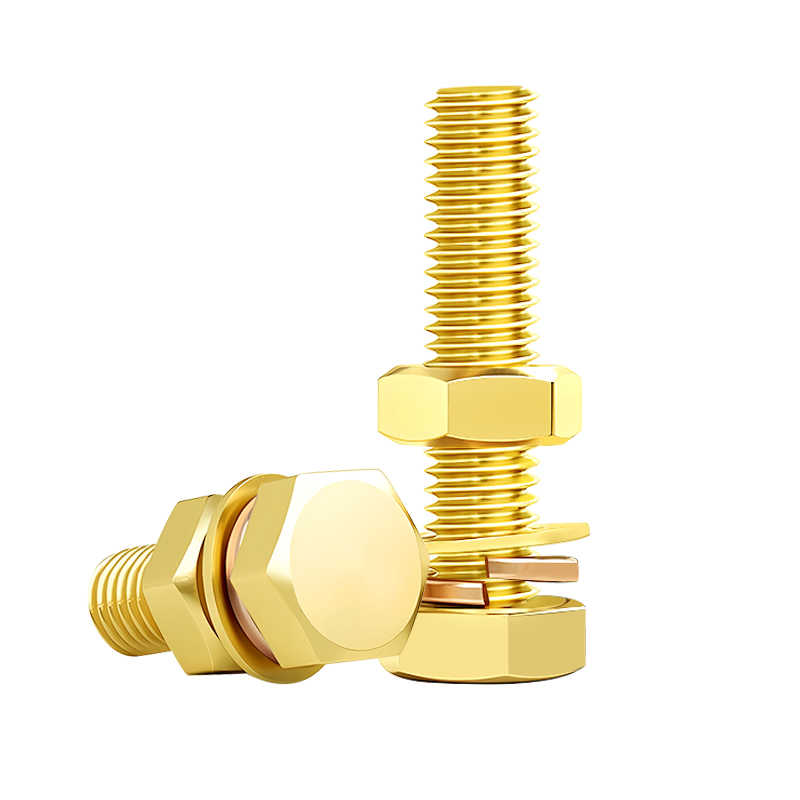
The Material Science Behind Brass Bolts
Brass is an alloy primarily composed of copper and zinc, giving it several technical advantages:
1. Natural Corrosion Resistance
Brass does not rust like steel. It forms a protective oxide layer that slows further corrosion, making it ideal for humid, marine, and mildly acidic environments.
2. Excellent Electrical Conductivity
Thanks to its copper content, brass bolts are widely used in electrical and grounding applications, where reliable conductivity is required without excessive oxidation.
3. Non-Magnetic & Spark Resistant
Brass fasteners are non-sparking, which makes them safer for use in explosive or flammable environments such as oil & gas facilities or chemical plants.
4. Good Machinability
Brass is easy to machine, allowing for:
Precise threads
Custom bolt sizes
Tight tolerances
This makes brass bolts well-suited for custom fastener manufacturing and small batch precision components.
Why Engineers and Designers Trust Brass Bolts
Across engineering standards and design specifications, brass bolts are often recommended when:
Aesthetic appearance is visible and important
Corrosion protection is needed without coatings
Electrical compatibility matters
Dissimilar metal corrosion must be minimized
In architectural design, brass bolts are frequently chosen for exposed connections, decorative joints, and restoration projects because they age gracefully, developing a natural patina rather than flaking or rusting.In electrical engineering, brass remains a preferred material for terminals, connectors, and grounding hardware due to its balance of strength and conductivity.
Understanding the Limitations of Brass Bolts
A reliable fastener choice also means knowing where not to use it. Brass bolts are not designed for high load structural applications. Compared to alloy steel or stainless steel, brass has Lower tensile strength and lower hardness. For heavy structural loads or high stress mechanical systems, steel or stainless steel bolts are more appropriate. However, when used within their designed load range, brass bolts provide excellent long-term stability, reliability, and visual quality.
Corrosion Resistance Meets Aesthetic Value
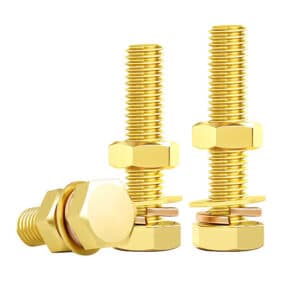
One of the strongest advantages of brass bolts is that corrosion resistance and aesthetic value come together naturally. Unlike many other fasteners, brass does not require additional finishes or coatings to perform well or look attractive. Its warm, gold like color enhances visible assemblies, making it a preferred choice for applications where fasteners are part of the overall design. Over time, brass develops an even, natural patina rather than rust or surface degradation, preserving both appearance and integrity. For industries where fasteners are meant to be seen,brass bolts deliver a refined, professional finish without compromising performance.
Conclusion
Brass bolts are far more than decorative fasteners; they offer reliable corrosion resistance, excellent electrical conductivity, safe non-sparking performance, and a timeless aesthetic appeal. When strength requirements are moderate and factors such as durability, conductivity, and visual quality are important, brass bolts remain a smart and proven choice trusted by engineers, designers, and manufacturers alike. For custom brass bolts, threaded fasteners, or precision machined brass components, partnering with an experienced manufacturer helps ensure consistent quality, material compliance, and dependable long term performance.