Lock nuts are small components, but choosing the wrong type can lead to loosening, vibration failure, fatigue cracking, or even structural collapse. In many real world failures, the issue isn’t the bolt,it’s the lock nut selection, installation, or finish. This article breaks down what lock nuts are, the main types, how to choose the right one, and common mistakes buyers make, based on real manufacturing and application experience.
Where lock nuts come from?
Lock nuts were first invented and manufactured by the United States around 1990. Initially, they were primarily used in aerospace applications, where maintaining secure fasteners under vibration and dynamic loads was critical. Over time, their use gradually expanded into everyday industries, including consumer electronics (3C products), sports equipment, and even mobile phones, due to their reliable anti-loosening properties. When lock nuts were first developed in the U.S., they were relatively expensive, reflecting both the novelty of the technology and the high precision required for aerospace grade fasteners. Today, they are widely manufactured and available at a much lower cost, yet they continue to be a vital component in both industrial and consumer applications.
What Is a Lock Nut?
A lock nut is a specialized type of nut engineered to resist loosening when subjected to vibration, dynamic loads, or repeated stress. Unlike standard hex nuts, lock nuts generate prevailing torque, a built in resistance that must be overcome during installation, allowing them to maintain clamping force even under movement or shock. Because of this reliable performance, lock nuts are widely used across various industries, including automotive and off-road applications, heavy machinery and earth-moving equipment, steel structures and industrial presses, as well as solar mounting systems and wind loaded structures.
Common Types of Lock Nuts
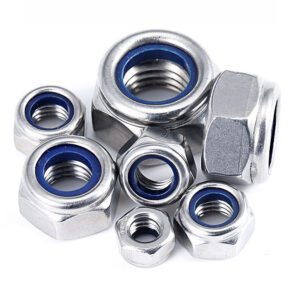
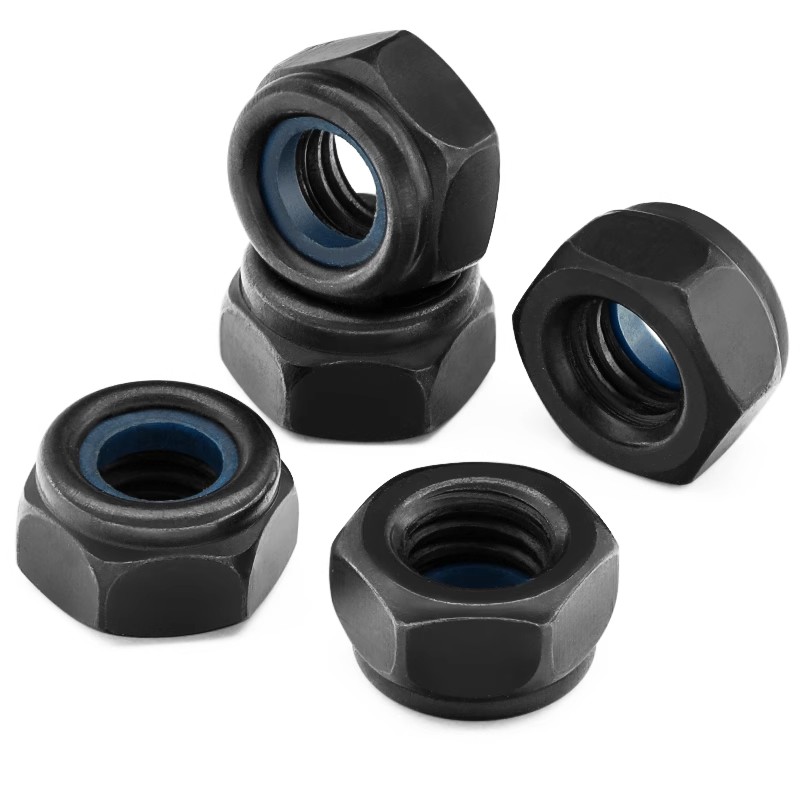
1. Nylon Insert Lock Nuts (Non-Metallic Lock Nuts)
These nuts contain a nylon insert at the top of the nut. When the bolt passes through, the nylon deforms around the threads, creating friction and preventing loosening.The common standard is DIN 985.
2. All Metal Lock Nuts
All metal lock nuts achieve their locking function through metal deformation instead of relying on plastic inserts, making them ideal for high temperature or harsh environments. Two commonly referenced standards are DIN 985 and DIN 889.1. DIN 985 features a thinner, taller, and slimmer profile with standard strength, while DIN 889.1 is shorter, thicker, and stronger, capable of reaching strength class 8. In practical applications, DIN 889.1 provides higher load capacity and greater durability, though it is less commonly available in general markets compared to DIN 985.
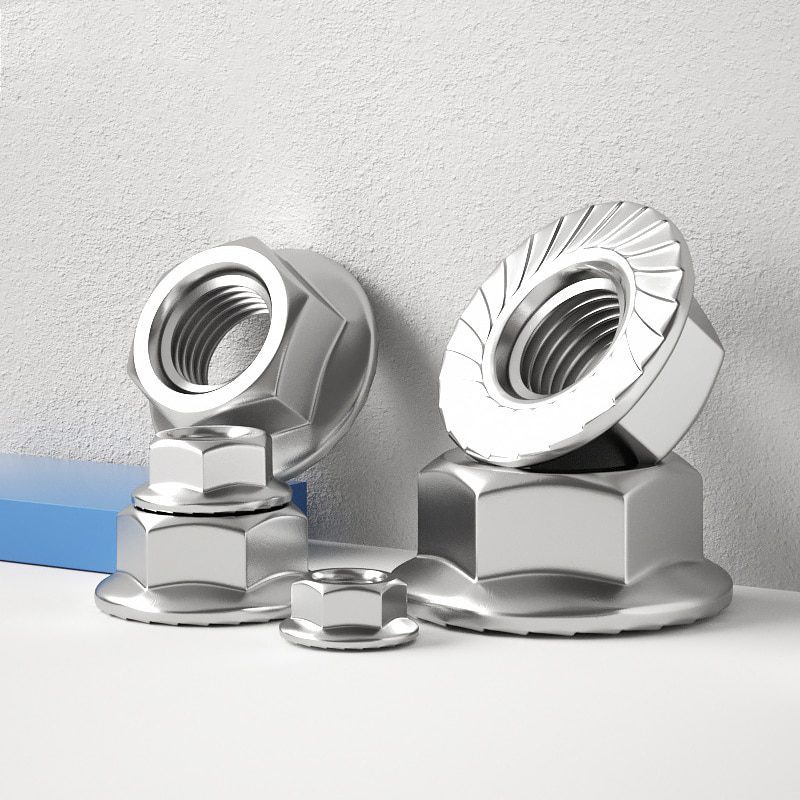
3. Flange Lock Nuts
Flange lock nuts integrate a built-in washer at the base. Some flange nuts also include serrations that bite into the mating surface to resist rotation.
Pros and Cons of Common Lock Nut Types
| Lock Nut Type | Pros | Cons |
|---|---|---|
| Nylon Insert Lock Nuts |
• Excellent vibration resistance • Easy to install • Cost-effective and widely available • Good for general-purpose applications |
• Limited temperature resistance (nylon degrades at high heat) • Not ideal for repeated reuse • Nylon can age or degrade in harsh environments |
| All-Metal Lock Nuts |
• Suitable for high-temperature applications • No plastic components to degrade • Strong and durable under heavy loads • Can be reused more reliably than nylon insert types |
• Higher installation torque required • More expensive than nylon insert nuts • Can increase thread wear during repeated use |
| Flange Lock Nuts |
• Built-in washer distributes load evenly • Faster installation (no separate washer needed) • Good resistance to loosening • Reduces risk of surface embedment |
• Serrated flange may damage mating surfaces • Not ideal for soft or coated materials • Slightly bulkier than standard lock nuts |
How to Choose the Right Lock Nut
Choosing the right lock nut requires more than matching thread size. The correct selection depends on how the fastener will perform under real working conditions.
1. Working Environment
Consider temperature, moisture, corrosion, and chemical exposure. Nylon insert lock nuts are not suitable for high temperatures, while all-metal lock nuts perform better in hot or harsh environments. Outdoor or coastal applications may require stainless steel or corrosion-resistant finishes.
2. Vibration Level
High or continuous vibration demands stronger locking mechanisms. All-metal lock nuts or flange lock nuts provide better resistance than standard nylon insert types in severe vibration conditions.
3. Disassembly Frequency
If the joint requires frequent removal and reinstallation, avoid nylon insert lock nuts, as their locking ability decreases with reuse. All-metal lock nuts are more suitable for repeated assembly.
4. Load Type and Strength Requirements
Evaluate whether the load is static, dynamic, or cyclic. Match the lock nut strength grade to the bolt grade to avoid fatigue failure or thread damage. Higher loads may require thicker or higher-grade lock nuts.
5. Cost, Standards, and Certification
Price should never be the only factor. Always select lock nuts that comply with recognized standards such as DIN, ISO, or ASTM, and ensure suppliers can provide material and mechanical property certifications.
Selecting the right lock nut upfront improves safety, reduces maintenance, and extends the service life of the entire fastening system.
Common Misconceptions About Lock Nuts
Despite their widespread use, lock nuts are often misunderstood. These misconceptions can lead to improper installation, reduced service life, or even joint failure.
1. “Lock nuts will never loosen.”
Lock nuts are designed to resist loosening, not eliminate it entirely. Incorrect torque, contaminated threads, mismatched grades, or poor installation can still cause failure.
2. “Tighter is always better.”
Overtightening can be just as dangerous as under-tightening. Excessive torque increases stress on threads, accelerates fatigue, and may result in sudden fracture or stripped threads.
3. “All lock nuts perform the same.”
Different lock nut designs offer different performance levels. Nylon insert, all-metal, and flange lock nuts each behave differently under vibration, temperature, and load conditions.
4. “Surface finish doesn’t affect performance.”
Surface finishes such as electroplating or hot-dip galvanizing change the friction coefficient between threads. This directly impacts the actual clamping force and can reduce the locking effectiveness if torque values are not adjusted.
5. “Lock nuts are reusable indefinitely.”
Some lock nuts, especially nylon insert types, lose their prevailing torque after repeated use. Reuse without inspection can compromise joint security.
Conclusion
Lock nuts may look like simple hardware, but as we’ve seen, choosing the right one makes a real difference. The right lock nut helps your assembly stay tight, safe, and reliable over time while the wrong choice can lead to loosening, extra maintenance, or even failure. By understanding the different types of lock nuts, where they work best, and the common mistakes to avoid, you can make smarter decisions that save time, money, and headaches down the road. In short, don’t treat lock nuts as an afterthought pick the right one for the job, install it correctly, and your fasteners will do exactly what they’re supposed to do.